

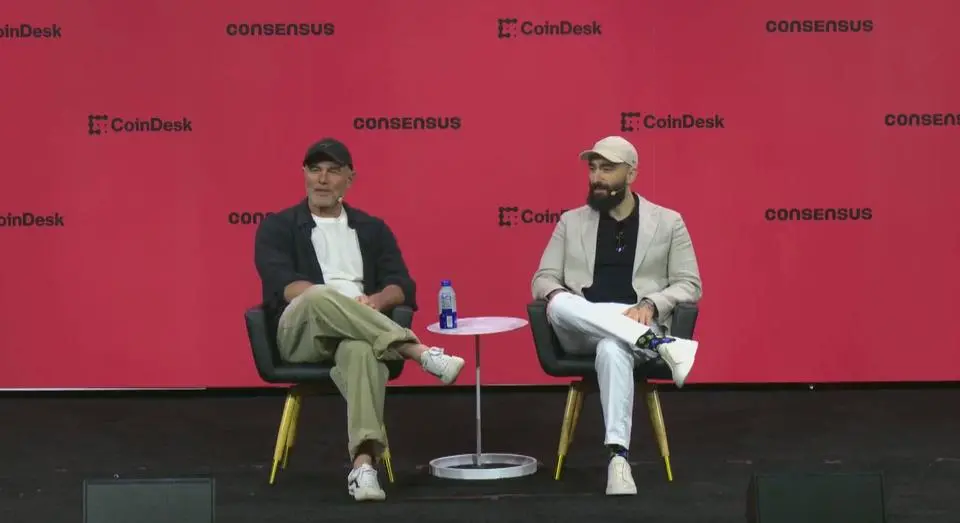
Zcash, the privacy-focused cryptocurrency, has announced an ambitious roadmap to introduce quantum-recoverable wallets within a month and achieve full post-quantum security by 2027. The news was delivered by CEO Zooko Wilcox during a live event, where he emphasized that Bitcoin no longer fulfills its original promise as cypherpunk-grade money, creating an opportunity for Zcash to lead in both privacy and resilience.
Quantum Threat and Zcash's Response
The looming threat of quantum computing has long cast a shadow over blockchain security. Most cryptocurrencies rely on elliptic curve cryptography (ECC) for key generation and transaction signing, a system that quantum computers could potentially break within decades—or sooner if development accelerates. Zcash's current architecture uses a similar cryptographic foundation, but the team has been working on quantum-resistant alternatives for years. The first milestone—quantum-recoverable wallets—will allow users to reclaim funds even if their private keys are compromised by a quantum attack. This is achieved through a novel smart contract layer that enables post-quantum signature verification without breaking backward compatibility. The full post-quantum upgrade, planned for within 12 to 18 months, will embed lattice-based cryptography into the core protocol, making Zcash transactions resistant to both classical and quantum adversaries.
Wilcox explained that the decision to go quantum-proof is not just about future-proofing but also about restoring the original cypherpunk ethos. "Bitcoin was supposed to be digital cash for the world, but it has become a surveillance tool. Zcash has always been about privacy, and now we are adding longevity," he said. The upgrade aligns Zcash with recent advances in post-quantum cryptography standardized by NIST, which includes CRYSTALS-Kyber for public-key encapsulation and CRYSTALS-Dilithium for digital signatures. Zcash's engineering team is also working on a backward-compatible migration path to ensure users do not lose existing funds when the switch occurs.
Market Impact and Investor Interest
The announcement has had an immediate effect on ZEC's price. Over the past 30 days, ZEC has rallied over 110%, driven largely by a major investment from Multicoin Capital, a prominent crypto venture firm. While the exact amount remains undisclosed, sources close to the deal suggest it is one of Multicoin's largest position sizes, further validating Zcash's strategic pivot. The investment came after months of due diligence, where Multicoin's analysts examined Zcash's ability to scale, its privacy guarantees, and its resistance to quantum attacks. The firm's partner, Tushar Jain, has been vocal about the need for privacy in public blockchains and sees Zcash as the leading contender in a market that could become essential as regulatory pressures increase.
Beyond the quantum roadmap, Zcash is also pursuing aggressive scaling goals. The team aims to achieve throughput comparable to Visa and Mastercard, handling tens of thousands of transactions per second. This would be a massive leap from current limitations, where the network processes around 40 transactions per second. The scaling plan involves sharding the shielded pool, implementing layer-2 solutions like Zcash Rollups, and optimizing the consensus protocol for parallel processing. Wilcox noted that these improvements are critical for real-world adoption, especially in regions where traditional banking is inaccessible.
Adoption and Ecosystem Growth
Adoption of Zcash's shielded pool has been accelerating, with cross-chain swaps playing a pivotal role. Through integrations like Near Intents, users can now move assets from other blockchains directly into shielded ZEC without leaving a trace on the source chain. This interoperability has helped grow the shielded pool to approximately 30% of the total circulating supply of ZEC—roughly 4.5 million ZEC out of 15 million in circulation. That is a significant milestone, considering that just two years ago, less than 5% of ZEC was held in shielded addresses. The increase reflects growing awareness among users and institutions about the importance of on-chain privacy, as well as the technical improvements that have made shielded transactions cheaper and faster.
Wilcox also highlighted upcoming governance changes. The Zcash Foundation and the development company behind Zcash are exploring proposals to shorten block times from 75 seconds to 30 seconds or less, which would improve user experience and reduce confirmation latency. Additionally, token-holder voting is being discussed as a way to decentralize decision-making around protocol upgrades and treasury management. Currently, the Zcash development fund is controlled by a tight-knit group, but a more democratic model could attract broader community participation and align incentives. These proposals are expected to be put to a vote within the next few months, with implementation later in the year.
The broader privacy coin ecosystem is also watching Zcash closely. Competitors like Monero and Dash have their own approaches—Monero uses ring signatures and stealth addresses, while Dash provides optional PrivateSend mixing. However, Zcash's use of zero-knowledge proofs (zk-SNARKs) offers a theoretically superior privacy guarantee, as it can prove a transaction is valid without revealing any details about the sender, receiver, or amount. The upcoming quantum upgrade further sets Zcash apart, as none of its direct competitors have announced similar timelines for post-quantum security. Analysts believe this could give Zcash a first-mover advantage as enterprises and governments begin to assess the long-term viability of blockchain infrastructure.
In addition to technical advancements, Zcash is seeing increased integration in the decentralized finance (DeFi) space. Several DeFi protocols on Ethereum and Near have started to accept shielded ZEC as collateral, allowing users to borrow stablecoins or earn yields while maintaining privacy. This bridges the gap between opaque privacy coins and the transparent world of DeFi, a combination that many consider essential for mainstream adoption. The team is also working on a private version of the ERC-20 standard, which would allow any token to be traded privately on Zcash's shielded layer, further expanding the ecosystem.
Looking forward, Zcash's roadmap remains ambitious. After achieving quantum-proof status, the team plans to integrate hardware wallet support for shielded addresses, improve mobile wallet usability, and launch cross-chain atomic swaps that preserve privacy. The ultimate goal, according to Wilcox, is to create a financial system that operates "without needing to trust anyone"—a vision he admits is still years away but now feels closer than ever. With the quantum-recoverable wallets due within weeks, the countdown has begun for Zcash to prove it can be both private and future-proof in a rapidly changing cryptographic landscape.
The upcoming months will be critical for Zcash's execution. While the community has praised the vision, some skeptics question whether the team can deliver on such aggressive timelines. The previous upgrade, Zcash 6.0, faced delays due to unforeseen complexities in implementing the new proving system. However, the recent investment from Multicoin and a 110% price rally have injected renewed confidence. Developers have been posting regular engineering updates on social media, and the core team has expanded to include specialists in post-quantum cryptography. As the deadline for quantum-recoverable wallets approaches, all eyes are on Zcash to demonstrate that privacy can withstand the quantum era.
Source: Coindesk News