

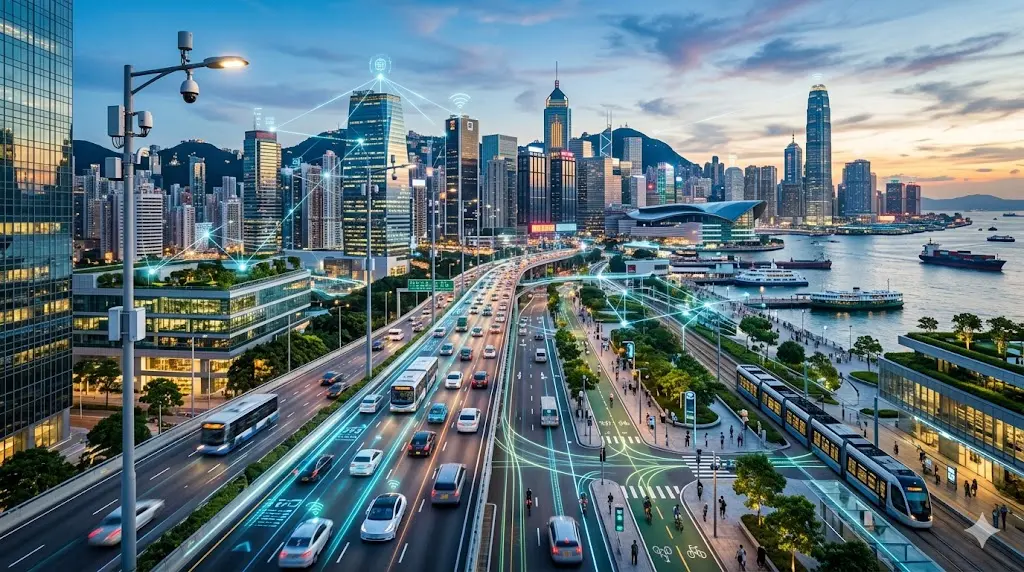
Smart cities are no longer just futuristic urban experiments. They’re quickly becoming the backbone of the digital economy because they connect infrastructure, data, businesses, and citizens in ways that improve efficiency and create new economic opportunities. From AI-powered traffic systems to digital payment ecosystems, smart cities help economies move faster, smarter, and with fewer operational gaps.
Smart cities matter because they combine technology, data, and public infrastructure to improve economic activity, reduce waste, support digital businesses, and create better living conditions. In 2026, cities that invest in smart systems will probably attract more startups, stronger investment, and higher digital innovation than cities that don’t adapt.
What Is Smart Cities and Why Does It Matter?
Smart Cities: A smart city uses connected technology, real-time data, and digital infrastructure to improve transportation, energy use, public services, communication, and economic performance.
Here’s the thing. Most people think smart cities are only about flashy technology like self-driving cars or facial recognition systems. That’s only part of the picture.
A true smart city connects multiple systems together. Traffic signals communicate with transportation networks. Public utilities use sensors to manage energy consumption. Businesses access digital infrastructure that supports faster payments, logistics, and customer services.
The digital economy depends heavily on speed and connectivity. Smart cities make both possible.
For example, a food delivery startup operating in a highly connected urban area can reduce delivery times because traffic systems are optimized through real-time monitoring. Warehouses use automation. Payment systems process instantly. Customers track everything through mobile apps.
That creates a ripple effect across the economy.
In my experience, cities that prioritize digital infrastructure tend to attract more entrepreneurs because businesses hate friction. Slow transportation, unreliable internet, and outdated systems quietly kill productivity every single day.
Why Smart Cities Matters in 2026
By 2026, the digital economy won’t simply support smart cities. It will depend on them.
Remote work, e-commerce, fintech platforms, AI automation, and connected public services are growing at a pace that older urban systems can’t easily handle anymore. Cities built around manual processes are already struggling with congestion, energy waste, and rising operational costs.
What most people overlook is that smart cities aren’t only benefiting residents. They’re becoming competitive economic assets.
A city with advanced digital infrastructure can attract:
Technology startups
Global investors
E-commerce logistics firms
AI companies
Fintech businesses
Remote workers
International partnerships
That’s a pretty big shift.
Take a realistic example. Imagine two similar cities competing for a global technology company’s regional office. One city offers intelligent transportation systems, fast broadband coverage, digital public services, and energy-efficient infrastructure. The other still relies heavily on paper-based systems and outdated traffic management.
The decision becomes obvious.
Smart cities also help governments manage resources more efficiently. Automated water monitoring systems can detect leaks before they become expensive disasters. Digital energy grids reduce electricity waste. AI-based traffic systems lower fuel consumption and commuting times.
That matters financially.
A report from multiple urban development studies has shown that cities using smart mobility systems often reduce travel delays and operational inefficiencies significantly over time. Less wasted time means more economic activity.
Expert Tip
If businesses want long-term digital growth, they shouldn’t just evaluate market size anymore. They should evaluate smart infrastructure readiness. A city’s digital maturity increasingly affects hiring, customer experience, logistics, and scalability.
How to Build Smart Cities for the Digital Economy
Building a smart city isn’t about installing random technology everywhere. That approach usually fails.
The cities seeing real progress follow a structured process.
1. Build Reliable Digital Infrastructure
Everything starts with connectivity.
High-speed internet, cloud systems, IoT networks, and secure data centers form the foundation of smart urban systems. Without reliable infrastructure, advanced technology becomes inconsistent and expensive to maintain.
Cities investing in 5G networks and public digital access are usually better positioned for digital business growth.
2. Integrate Public and Private Systems
Smart cities work best when governments and businesses collaborate instead of operating separately.
Transportation apps, payment systems, energy platforms, and emergency services need data-sharing capabilities to function smoothly.
A disconnected smart city isn’t really smart.
3. Use Real-Time Data Responsibly
Data is the fuel behind smart city operations.
Traffic flow monitoring, environmental sensors, and utility management systems provide insights that help cities react quickly to problems. Still, privacy concerns matter a lot here.
People want convenience, but they also want transparency about how their information is used.
That balance is tricky. Some cities still haven’t figured it out completely.
4. Prioritize Sustainability
One surprising truth is this: smart cities aren’t just about economic growth. They’re also about survival.
Urban populations are expanding rapidly. Energy consumption is rising. Climate pressure keeps increasing.
Smart energy systems, digital waste management, and intelligent water usage can reduce long-term environmental strain while lowering operational expenses.
5. Support Local Innovation
Cities become smarter faster when local startups and entrepreneurs are involved.
Small companies often create highly practical solutions for transportation, healthcare, education, and logistics because they understand local problems better than giant corporations sometimes do.
I’ve seen smaller regional tech firms outperform massive vendors simply because they focused on solving one specific urban issue properly.
The Unexpected Problem Smart Cities Must Avoid
Here’s a counterintuitive point most articles ignore.
More technology doesn’t automatically create a smarter city.
Actually, too much disconnected technology can make cities more complicated and frustrating.
Some urban projects spend millions on flashy digital tools that citizens barely use. Others collect huge amounts of data without clear implementation strategies.
That creates confusion instead of efficiency.
A city filled with apps nobody understands isn’t smart. It’s cluttered.
The best smart cities focus on practical improvements first. Better transportation. Faster public services. Reliable internet access. Efficient utilities.
Simple things often produce the biggest economic gains.
Common Mistake Businesses Make
Many companies assume smart cities only benefit large enterprises. That’s not true anymore.
Small businesses gain enormous advantages from digital urban systems because they can access improved logistics, digital advertising networks, local SEO visibility, and automated customer engagement tools without huge infrastructure investments.
Expert Tips and What Actually Works
Let me be direct. Smart city projects fail when leaders focus more on appearances than usability.
Fancy presentations don’t matter if residents can’t access reliable transportation or digital services consistently.
The smartest urban projects usually share three traits:
They solve everyday problems.
They simplify user experiences.
They scale gradually instead of trying to transform everything overnight.
One mid-sized city in Asia introduced AI-powered traffic management across only a few busy districts rather than the entire city. Within months, delivery businesses reported faster operations and lower transportation costs. That limited rollout gave officials real-world feedback before larger expansion.
That’s smarter than launching massive systems all at once.
Another thing worth mentioning is cybersecurity. As cities become more connected, digital threats become more serious. Power grids, healthcare systems, and transportation networks all become possible targets if security isn’t built into the infrastructure early.
Honestly, some cities are still underestimating this risk.
Expert Tip
Smart cities should treat cybersecurity like public safety, not just an IT issue. One major system breach could disrupt transportation, financial transactions, healthcare access, and emergency communication simultaneously.
How Smart Cities Are Changing Business Operations
Businesses now operate differently inside digitally connected cities.
Retailers use predictive analytics to manage inventory. Delivery companies optimize routes in real time. Restaurants rely on automated ordering systems integrated with local transportation data.
Even real estate markets are changing.
Commercial property values often rise in areas with stronger digital infrastructure because businesses want reliable connectivity and efficient urban systems nearby.
Remote workers also influence smart city growth. Professionals increasingly choose cities offering:
Fast internet
Digital public services
Efficient transportation
Smart energy systems
Flexible work infrastructure
That shift affects tourism, housing demand, coworking spaces, and local entrepreneurship.
A decade ago, cities competed mostly on population and industrial output. Now they compete on digital experience too.
That’s a huge transformation.
Why Governments Are Investing Aggressively in Smart Urban Systems
Governments know economic competitiveness increasingly depends on digital readiness.
Countries investing in smart infrastructure aren’t simply modernizing cities. They’re positioning themselves for long-term economic relevance.
Public transportation systems powered by AI can reduce congestion costs. Digital healthcare platforms improve patient access. Smart utility systems reduce operational waste.
Those savings add up quickly across millions of residents.
What’s interesting is that many smart city investments eventually benefit private businesses more than governments initially expect.
When infrastructure improves, companies expand faster. Startups emerge more frequently. Employment opportunities grow.
The digital economy becomes more active because the city itself becomes more efficient.
People Most Asked About Smart Cities
What makes a city “smart”?
A smart city uses digital technology, real-time data, and connected infrastructure to improve transportation, public services, utilities, communication, and economic operations. The goal is making urban life more efficient and responsive.
Why are smart cities important for the digital economy?
Smart cities support the digital economy by improving connectivity, reducing inefficiencies, enabling faster business operations, and creating better environments for innovation, e-commerce, fintech, and remote work.
Are smart cities only for large countries?
No. Smaller cities and developing regions can benefit significantly from smart systems too. In many cases, smaller cities adapt faster because they have fewer legacy systems slowing implementation.
What industries benefit most from smart cities?
Technology, logistics, retail, healthcare, fintech, transportation, energy, and real estate industries often benefit the most because they rely heavily on data, connectivity, and operational efficiency.
Do smart cities create privacy concerns?
Yes, and that’s a serious issue. Smart systems collect large amounts of data, so governments and companies must build transparent privacy policies and strong cybersecurity protections to maintain public trust.
Can smart cities reduce environmental problems?
In many cases, yes. Smart energy systems, optimized transportation, and digital waste management can lower emissions, reduce energy waste, and improve resource efficiency over time.
Is smart city technology expensive?
Initial investment costs can be high, but long-term savings from operational efficiency, lower maintenance costs, and economic growth often offset those expenses gradually.
Final Thoughts
Why Smart Cities Is Becoming Essential in the Digital Economy comes down to one simple reality: modern economies run on connectivity, efficiency, and data. Cities that fail to modernize will probably struggle to attract investment, businesses, and digital talent over the next decade.
Smart cities aren’t perfect, and some projects absolutely get overhyped. Still, the broader direction is clear. Urban infrastructure is becoming digital infrastructure. And the cities adapting fastest are positioning themselves for stronger economic growth, better public services, and more sustainable development.
Businesses, governments, and entrepreneurs who understand this shift early will likely have a major advantage.
Our network platforms help businesses improve brand visibility, gain high authority backlinks, and strengthen SEO ranking through premium press release distribution services and targeted digital marketing services. Whether you're a startup, agency, or growing brand, our solutions support organic traffic growth, media coverage, and instant publishing opportunities designed to expand online reach and business credibility efficiently.