

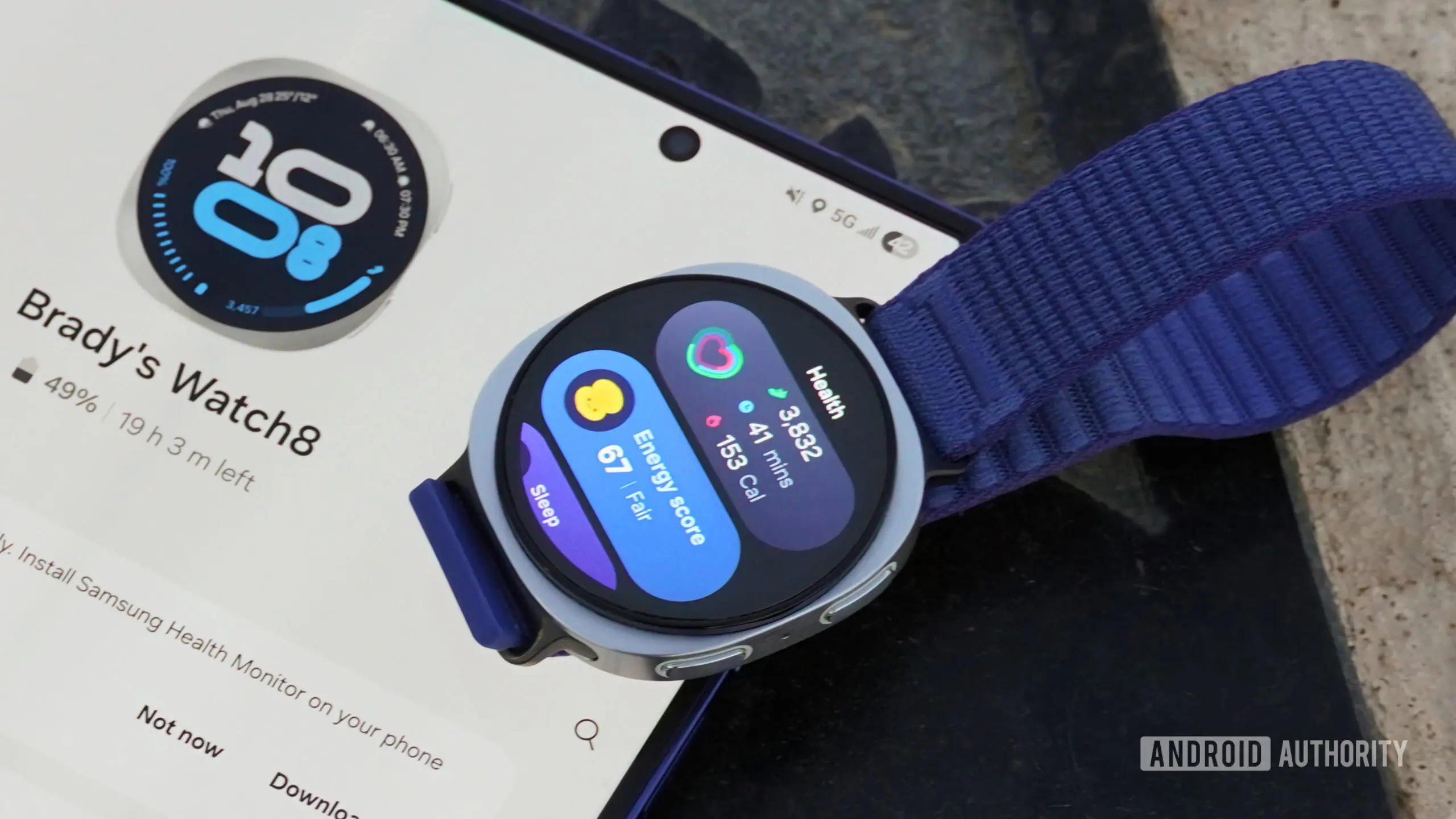
Samsung’s Galaxy Watch lineup has long been praised for its robust health tracking capabilities, but users have often complained that the raw data—heart rate, sleep stages, body composition—sits in graphs without much context. A new leak suggests that this is about to change dramatically. Samsung is reportedly preparing the first beta of One UI 9 Watch, an update that will heavily rely on Galaxy AI to transform passive data collectors into proactive health coaches. Instead of simply showing you numbers, your watch may soon explain what those numbers mean and what you should do about them.
The tip comes from a well-known leaker on X, @TonySamsunglove, who says Samsung is working on an AI-driven overhaul of its health platform. According to the leak, the One UI 9 Watch beta will introduce AI-generated health reports that go beyond daily summaries. The system will search for patterns, predict trends, and provide personalized recommendations based on your habits. For example, instead of a generic sleep score, the watch might tell you that your deep sleep is declining due to late caffeine intake and suggest cutting off coffee after 4 PM. Or it could analyze your resting heart rate over weeks and alert you to potential stress build-up before you even feel it.
This shift represents a fundamental change in how Samsung approaches wearable health. Previously, the company focused on sensor accuracy and the number of metrics tracked. The BioActive sensor, which debuted on the Galaxy Watch 4, already measures heart rate, sleep, blood oxygen, and body composition. The Galaxy Watch 6 and 7 added temperature sensing and advanced sleep coaching. However, the interpretation of that data has been left largely to the user. One UI 9 Watch aims to close that gap by using machine learning to contextualize the information.
What Galaxy AI could bring to health tracking
Artificial intelligence in wearables is not new—Apple Watch has had trend analysis for years, and Fitbit offers a Premium service with guided programs. But Samsung’s approach appears to be deeper integration at the system level, baked into One UI Watch rather than a separate subscription. The tipster indicates that Galaxy AI will analyze your biometric data alongside contextual inputs like activity logs, calendar events, and weather to generate insights. For instance, your watch might correlate a spike in stress with a specific recurring meeting and suggest breathing exercises beforehand.
Another key area is sleep tracking. Current Galaxy Watch models already provide a sleep score and stages, but they rarely explain why you woke up frequently. With AI, the watch could identify that your room temperature, based on ambient sensor data, or your evening meal timing contributed to restlessness. The machine learning model would then offer actionable advice. Similarly, for exercise, the watch could recommend adjusting your workout intensity based on your recovery status, not just your heart rate zone.
The leak also mentions that Samsung is optimizing the BioActive Sensor itself for the next release. While specifics remain unclear, this could mean improved signal processing for more accurate readings during movement or new sensing modalities. Samsung has been working on non-invasive glucose monitoring for years, but that technology is not yet mature. More likely, the optimization will focus on reducing noise and improving consistency across different skin tones and activities.
Under the hood: Wear OS 7 and deeper Gemini integration
One UI 9 Watch will likely be based on Google’s Wear OS 7 platform, which itself is getting significant upgrades. According to earlier reports, Wear OS 7 will introduce deeper integration with Gemini, Google’s multimodal AI model. This could allow Samsung to leverage Google’s language and reasoning capabilities to generate natural-language health reports. For example, instead of a chart, you might see a paragraph that says: “Your heart rate variability has dropped 12% this week, likely due to reduced sleep quality. Try relaxing before bed with a 10-minute mindfulness session.”
Other platform-level improvements include battery life optimizations, live activity updates (similar to Apple’s Live Activities), and better workout tracking systems. These base enhancements give Samsung more headroom to run on-device AI models without draining the battery. The combination of Wear OS 7’s efficiency and Samsung’s own Exynos chipsets could make real-time AI analysis feasible on the wrist.
The timing of the beta is also telling. Samsung typically releases One UI Watch betas in the summer ahead of the new Galaxy Watch launch in August. If the beta drops in June 2026 as rumored, the stable version would debut with the Galaxy Watch 8 series. This aligns with the tipster’s claim that the first beta will be available for the Galaxy Watch 8 line in South Korea and the US, with other models following later. Past beta programs for One UI Watch 5 and 6 followed a similar pattern, starting with the latest hardware before expanding to older watches like the Galaxy Watch 5 and 6.
From data overload to actionable insights
The core problem Samsung is trying to solve is one that plagues the entire wearable industry: data overload. Most users look at their health app once a day and see a wall of numbers with no clear action items. Studies show that engagement with health data drops significantly after the first few weeks of owning a smartwatch. By making the data meaningful, Samsung hopes to keep users engaged and improve long-term health outcomes.
This is not Samsung’s first attempt at intelligent health features. The Galaxy Watch 7 already has an Energy Score that combines multiple metrics into a single readiness number. But that feature is still relatively basic—it gives a score and a few tips. One UI 9 Watch aims to go much further by offering multi-day trend analysis and predictive warnings. For example, it could detect the early signs of overtraining syndrome before you get injured, or warn you of an impending illness based on your resting heart rate and HRV trends.
Privacy implications are also important. On-device AI processing means sensitive health data does not need to leave the watch or phone. Samsung has been promoting its Knox security platform for health data, and the trend toward on-device processing aligns with industry moves to reduce cloud dependence. Users concerned about data privacy may find this reassuring.
The broader context is that the smartwatch market is maturing. Hardware improvements are slowing, so companies are competing on software and services. Samsung’s focus on AI-powered health coaching could be a differentiator against the Apple Watch, which already offers trend analysis and the Vitals app. Fitbit, now under Google, has similar ambitions with its Fitbit Premium. By integrating AI directly into One UI Watch without requiring a subscription, Samsung could appeal to cost-conscious buyers.
As the beta approaches, more details will likely emerge. For now, the prospect of a Galaxy Watch that tells you not just what happened to your body, but why and what to do about it, is an exciting step forward. If Samsung delivers on these promises, One UI 9 Watch could mark a turning point in how we interact with wearable health data.
Source: Android Authority News