

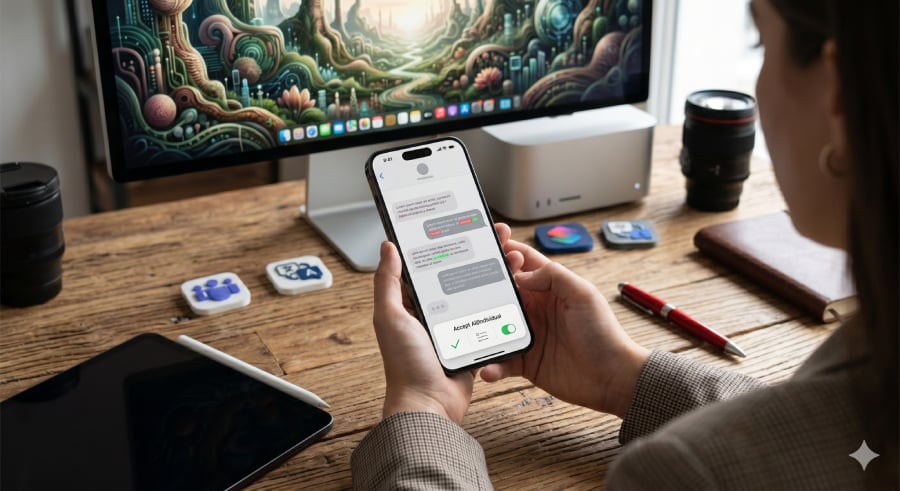
Apple is reportedly preparing a major overhaul of Siri, with a Grammarly-like writing tool among the key features expected at the Worldwide Developers Conference (WWDC) in June 2026. The tool, which would function as a built-in AI editor, represents Apple's latest effort to catch up with competitors like Google and Samsung in the rapidly evolving AI landscape. The system is said to display suggested revisions at the bottom of the screen, allowing users to accept individual changes, accept all, or reject all with a single tap. This feature, described as a "red pen" for Siri, would sit alongside a new keyboard-based function called "Write With Siri," designed to generate texts, emails, and essays from scratch.
A Grammarly-Like Experience for iPhone Users
The writing tool would mark a significant departure from Siri's traditional role as a voice assistant. By offering real-time grammar and style suggestions, it aims to transform Siri into a proactive writing partner, similar to popular applications like Grammarly or Microsoft Editor. According to reports from Bloomberg's Mark Gurman, the feature will be integrated directly into the iOS keyboard, making it accessible across apps without requiring users to switch contexts. The tool is expected to leverage Apple's on-device neural engines for processing, aligning with the company's long-standing privacy commitments. However, some advanced tasks may still require cloud-based processing through a secure enclave, a hybrid approach Apple has employed for other AI features.
The "Write With Siri" component, meanwhile, is described as a generative tool akin to ChatGPT or Google's Gemini. Users could prompt it to draft an email, compose a poem, or summarize a document directly from the keyboard. Apple has reportedly been testing the feature internally since early 2026, with engineers focusing on reducing latency and ensuring accurate tone detection. This could make the iPhone a more productivity-oriented device, especially for professionals who write frequently on the go.
AI-Generated Shortcuts and Personalized Experiences
Beyond writing, the next version of iOS is expected to introduce AI-generated shortcuts, allowing users to create custom automations based on natural language prompts. For example, a user might say "create a shortcut that sends my estimated arrival time to my spouse when I leave work" and have Siri generate the workflow automatically. This would replace the current system, which requires developers to pre-build shortcuts and submit them to Apple for approval. The change follows a similar move by Google with Android 17, which introduced AI-powered widget generation. Apple's implementation, however, is expected to focus on privacy, processing the prompt entirely on-device where possible.
This shift could make iOS significantly more personal, as users tailor their home screens to their unique routines. However, the degree of customization may be limited by Apple's desire to maintain control over the ecosystem. Developers may also be cautious, as unrestricted shortcut creation could introduce security risks. Apple is likely to implement guardrails, such as requiring approval for shortcuts that access sensitive data or trigger purchases.
Another visual enhancement reported is native AI wallpaper generation. While users have been able to create AI wallpapers through third-party apps and set them manually, direct integration into iOS would streamline the process. The feature is expected to offer styles ranging from abstract art to photorealism, using Apple's on-device machine learning models. This aligns with Apple's focus on making the iPhone experience more expressive without compromising performance.
The Bigger Picture: Apple's AI Strategy
These updates come as Apple works to close what many analysts perceive as a significant AI gap with Samsung and Google. Despite the launch of Apple Intelligence and its integration with ChatGPT in earlier iOS versions, critics have noted that Siri remains less contextually aware than competitors like Google Assistant or Samsung's Bixby. To address this, Apple has reportedly struck a deal with Google to use Gemini as the underlying AI model for the next version of Siri. The agreement is said to be worth $1 billion annually, underscoring Apple's willingness to invest heavily in catching up.
The new Siri will behave more like a modern AI chatbot, accepting text and voice inputs simultaneously and maintaining better contextual memory across conversations. Users may be able to stack multiple requests in a single command, such as "set a timer for 10 minutes, send a message to John saying I'm on my way, and remind me to buy milk at 5 PM." Siri would parse the request, execute each action, and provide confirmation responses. This represents a leap forward from the current system, which struggles with multi-part commands.
However, Apple is not just copying rivals; it aims to differentiate through privacy. Reports on iOS 27 indicate that Apple will let users control how long Siri retains conversation data, with options for limited memory. For privacy-conscious users, Siri could be set to forget interactions immediately after processing. This contrasts with Google's approach, which often relies on long-term data collection to improve services. Apple may also introduce an "opt-in" model for cloud-based AI features, giving users granular control over what data is sent to servers.
Another differentiation strategy involves creating an AI model marketplace. Given its vast iPhone user base, Apple could allow users to choose which AI model powers their Siri experience—Gemini, GPT-5, Claude, or even a future Apple-developed model. This would replicate the company's successful approach with web search, where Google pays billions to remain the default. By becoming the platform broker, Apple could generate significant revenue while giving users flexibility. Analysts estimate that such a marketplace could generate billions annually, as AI companies compete for default placement.
These developments are part of a broader shift at Apple. Throughout 2025, internal reports suggested that the company was prioritizing performance optimizations over new features. However, the rapid rise of generative AI has forced a strategic pivot. The integration of large language models into everyday tools—from writing to image generation—has become table stakes for smartphone makers. Apple's late entry, while potentially a disadvantage, could also allow it to learn from the mistakes of early adopters. For instance, Samsung's Galaxy AI launched with some privacy controversies, while Google's Pixel features have faced criticism for battery drain. Apple can position itself as the "privacy-first" alternative, even if it means slower adoption.
History shows that Apple has successfully entered late into markets before: the iPod wasn't the first MP3 player, the iPhone wasn't the first smartphone, and the iPad wasn't the first tablet. In each case, Apple's focus on user experience and ecosystem integration led to dominant market positions. The same could be true for AI, provided Apple can deliver polished, reliable features that work seamlessly across its hardware. The upcoming WWDC will be a critical test of whether Apple can convince developers and consumers that it has a coherent AI vision.
As WWDC 2026 approaches, the tech world will be watching closely. The conference, traditionally focused on software updates, has increasingly become a showcase for Apple's long-term ambitions. If the reported features materialize, they could give Siri a much-needed revival, turning it from a often-ignored assistant into a powerful productivity tool. Whether that will be enough to sway users who have already embraced Google Assistant, ChatGPT, or Samsung's Galaxy AI remains to be seen. But for Apple, the stakes are clear: the AI race is no longer optional, and Siri must evolve or risk becoming irrelevant.
Source: TechRepublic News