

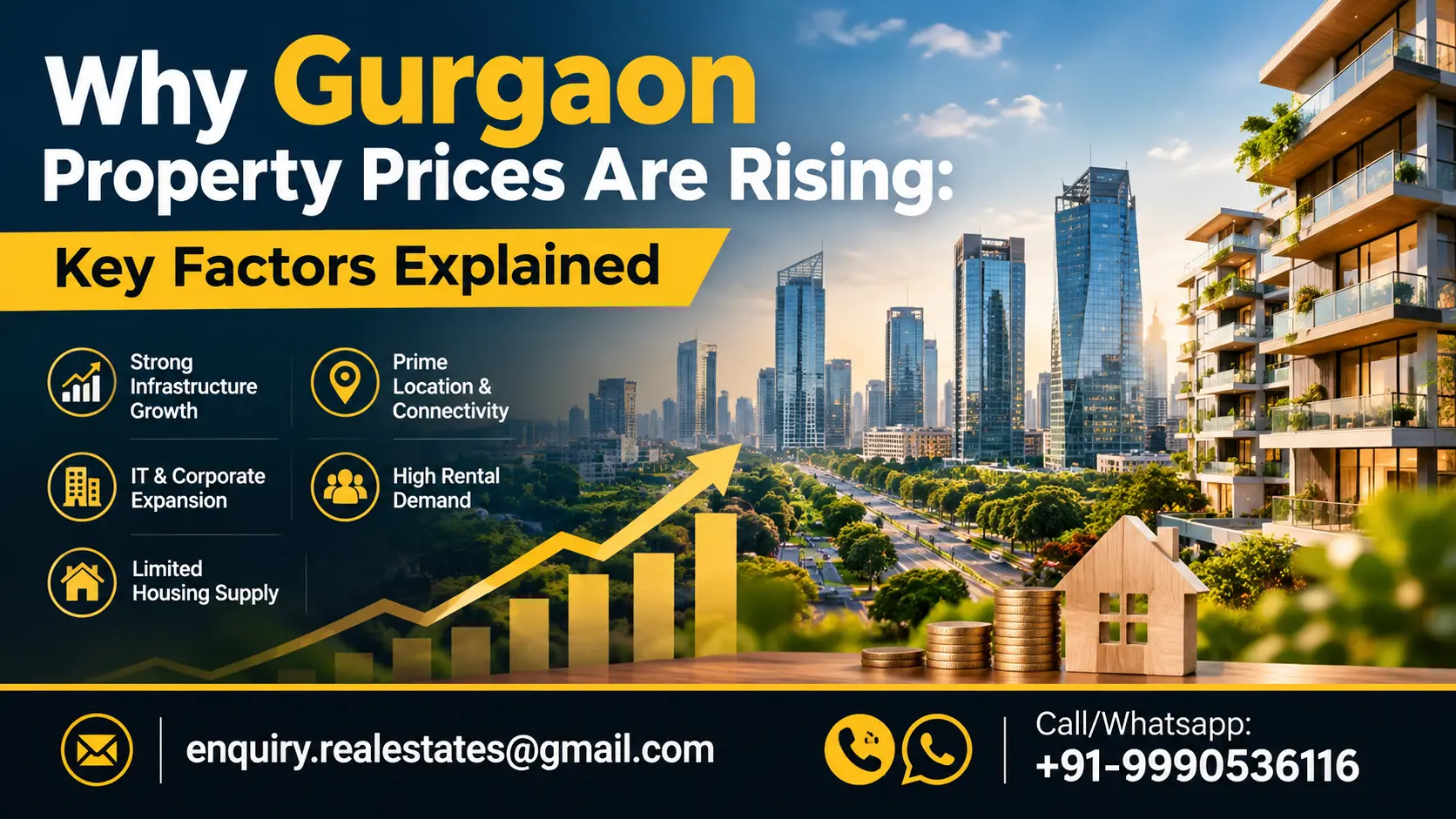
Over the past three decades, Gurugram (formerly Gurgaon) has evolved from a quiet agricultural fringe into North India's undisputed corporate, financial, and luxury residential capital. Today, property buyers, institutional funds, and market analysts frequently observe that Gurgaon property prices are rising at an unprecedented velocity across multiple micro-markets. Understanding this rapid value appreciation requires looking beyond surface-level speculative activity. Premium gated communities across the city, such as an Ireo New Project, illustrate how modern master planning, high-end lifestyle amenities, and proximity to major employment hubs continuously elevate property valuations and investor interest across the region.
This price escalation is not an isolated event; it represents a fundamental structural re-rating of NCR real estate. The convergence of mega-infrastructure projects, corporate headquarters expansion, high-income demographic growth, and land scarcity in mature sectors has created sustained upward pressure on real estate values. Whether you are a first-time homebuyer evaluating end-use options, a high-net-worth individual seeking capital preservation, or an institutional investor analyzing yield metrics, understanding the core growth drivers behind this price surge is essential.
This comprehensive guide breaks down the macro-economic forces, urban development milestones, statutory regulatory frameworks, and financial dynamics that explain why real estate valuations across Gurugram continue to reach new historical highs.
Why Gurgaon Property Prices Are Rising
Gurgaon's real estate trajectory reflects a mature, supply-constrained market driven by structural demand from high-earning corporate professionals, multinational enterprises, and long-term capital investors.
Macroeconomic Growth Drivers & Corporate Expansion
The Fortune 500 Concentration Effect
Gurugram hosts over 250 Fortune 500 companies, corporate headquarters, global capability centers (GCCs), and technology firms. The continuous influx of senior corporate executives, expatriates, and high-income tech professionals fuels consistent demand for premium residential housing. As corporate office leasing volumes hit record numbers in Cyber City, Golf Course Road, and Southern Peripheral Road, the surrounding residential sectors experience direct spillover demand, pushing per-square-foot sales prices and rental rates steadily upward.
Rising Disposable Incomes & Premiumization
The economic profile of home buyers across the National Capital Region (NCR) has shifted dramatically toward luxury and upper-mid segment preferences. High disposable income levels, expanding stock market wealth, and robust corporate bonus payouts have increased purchasing power. Buyers are increasingly migrating from unorganized urban housing or older builder floors into gated, high-density residential towers offering multi-tier security, integrated clubhouse facilities, and managed maintenance services.
Infrastructure Masterclasses: Expressways, Transit & Connectivity
Operationalization of the Dwarka Expressway (NPR)
The full operationalization of the 29-kilometer, 8-lane elevated Dwarka Expressway has fundamentally redefined regional accessibility. Connecting Mahipalpur in Delhi directly to Kherki Daula on NH-48, this arterial corridor reduces travel time to Indira Gandhi International (IGI) Airport to under 20 minutes from key western sectors. The rapid infrastructure completion along this belt has driven land values up significantly in Sectors 84, 88, 102, 106, and 113.
The Southern Peripheral Road (SPR) & Cloverleaf Node
Southern Peripheral Road acts as a crucial transit junction connecting Golf Course Extension Road, NH-48, and the Dwarka Expressway via a massive multi-tier cloverleaf interchange. Signal-free underpasses, road widening projects, and elevated bypass corridors have alleviated traffic bottlenecks. Consequently, purchasing residential inventory near a well-connected development like an Ireo New Project Gurgaon provides home buyers with strategic long-term accessibility to Cyber City and Central Delhi.
Rapid Metro & Proposed Yellow Line Extensions
Transit-oriented developments (TOD) command significant price premiums across global cities, and Gurugram is no exception. The seamless connectivity provided by the Rapid Metro along Golf Course Road, combined with planned metro expansions linking HUDA City Centre (Millennium City Centre) to Old Gurgaon and Cyber Hub, ensures sustained capital appreciation for transit-adjacent residential corridors.
Micro-Market Analysis: High-Performing Real Estate Belts
Golf Course Extension Road: The Mid-to-Luxury Dominator
Golf Course Extension Road has emerged as one of the most prosperous residential stretches in NCR. Characterized by wide sector roads, planned green buffers, and top-tier educational and medical institutions, this corridor attracts high-net-worth individuals seeking modern living environments. Established communities like Ireo The Corridors demonstrate how low-density master planning and extensive sports facilities retain high resale and rental valuations. Within Ireo Corridors Sector 67A Gurgaon, well-designed luxury units consistently outperform regional average rental yields due to steady corporate tenant demand.
Golf Course Road & Cyber City Zone: The Institutional Apex
Golf Course Road remains the financial peak of the regional property market. With land acquisition virtually impossible due to complete development, existing residential inventories command top valuations. Super-luxury condominiums here function as blue-chip store-of-value assets, exhibiting resilience against broader economic slowdowns.
New Gurgaon (Sectors 81–95): The Emerging High-Volume Gateway
Offering accessible entry-level price points relative to Golf Course Road, New Gurgaon has experienced rapid population settlement. Proximity to the Kundli-Manesar-Palwal (KMP) Expressway, Industrial Model Town (IMT) Manesar, and NH-48 makes this pocket an attractive hub for first-time buyers and yield-focused real estate investors.
Institutional Capital Inflows & Land Scarcity
Land Acquisition Costs & Municipal Charges
The primary component driving property prices higher is the sharp inflation in raw land costs across Haryana Urban Development Authority (HSVP) auctions and private land assemblages. Developers face higher capital outlays to acquire clear, unencumbered land parcels. Additionally, statutory charges—including External Development Charges (EDC), Infrastructure Development Charges (IDC), and municipal approval costs have increased, forcing developers to adjust launch prices upward to maintain operational viability.
Tier-1 Institutional Developers & Equity Backing
The market transformation following regulatory reforms has consolidated land development in the hands of strong, capitalized Tier-1 developers and institutional private equity funds. Reputable developers focus on high-quality construction materials, architectural excellence, and timely project handovers. The market presence of established developments such as Ireo Corridors Gurgaon highlights how buyer trust moves toward brands capable of executing large-scale, self-sustaining gated communities.
Changing Consumer Preferences: The Structural Demand Shift
Shift Toward Larger Living Spaces (3BHK & 4BHK)
Post-pandemic residential preferences have permanently shifted toward larger apartment footprints. Working professionals now demand dedicated home office spaces, study rooms, and extended balconies. Data indicates that over 65% of active home buyers in Gurugram specifically seek 3BHK and 4BHK configurations, leading to higher average ticket sizes per transaction across top sectors like Ireo Corridors Sector 67A.
Demand for Gated Integrated Townships
Standalone residential buildings lack the comprehensive security, power backup infrastructure, open green spaces, and recreational amenities demanded by modern urban buyers. Integrated gated townships offer a private ecosystem that combines convenience, safety, and community living, commanding higher rental premiums and capital values over unorganized housing options.
Statutory Regulatory Transparency & HRERA Compliance
HRERA Transparency Boosting Investor Confidence
The introduction of the Haryana Real Estate Regulatory Authority (HRERA) under the state framework transformed buyer sentiment. HRERA mandates dedicated escrow account management (70% of collections reserved for project construction), strict delivery schedules, and clear disclosure of sanctioned building plans on the official state portal (haryanarera.gov.in). Increased transparency has eliminated unsystematic execution risk, attracting foreign direct investment (FDI), non-resident Indian (NRI) capital, and institutional buyers back into under-construction real estate.
Mandatory Occupancy Certificates (OC) Protection
The legal enforcement of mandatory Occupancy Certificates (OC) issued by the Department of Town and Country Planning (DTCP) ensures that physical possession is granted only when buildings strictly adhere to structural safety codes, fire NOCs, and municipal utility connections. This strict compliance framework standardizes market quality, driving end-user confidence and property appreciation.
| Document / Clearance | Issuing Authority | Significance for Buyer | Impact on Valuation |
| HRERA Registration | HRERA Haryana | Ensures financial escrow discipline and timely delivery | Eliminates execution risk, enhancing buyer confidence |
| Building Sanction Plan | DTCP Haryana | Confirms legal structural approvals and unit count | Protects against unauthorized structural demolitions |
| Occupancy Certificate (OC) | DTCP Haryana | Certifies property is legal and safe for habitation | Mandatory for obtaining home loans and resale transfers |
| Fire NOC | Haryana Fire Dept | Validates emergency response systems and egress paths | Essential for residential safety and insurance coverage |
Financial Metrics & Rental Yield Performance
Calculating Real Investment Returns
Understanding property value expansion requires calculating gross and net rental yields. Investors utilize standard financial formulas to evaluate local income returns:
While average gross residential yields across India historically ranged between 2.0% and 3.0%, premier micro-markets in Gurugram now deliver gross returns between 3.8% and 5.2%. This competitive yield profile continues to pull private capital away from traditional fixed-income instruments into physical real estate assets.
Breakdown of Total Cost of Ownership (TCO)
When purchasing real estate in Gurugram, buyers must account for fee structures beyond the advertised Base Selling Price (BSP). Understanding the total cost breakdown prevents unexpected financial gaps during project closing:
- External Development Charges (EDC) & Infrastructure Development Charges (IDC): Statutory payments remitted to government authorities for regional trunk infrastructure creation.
- Preferential Location Charges (PLC): Premium costs applied to specific floor heights, corner configurations, or park-facing units.
- Stamp Duty and Registration Fees: Standardized at 7% for male buyers and 5% for female buyers within municipal limits.
- Goods and Services Tax (GST): Applicable at 5% on under-construction non-affordable residential inventory (0% on ready-to-move homes with an OC).
- Interest-Free Maintenance Security (IFMS): A reserve corpus collected prior to possession to fund long-term building maintenance.
Industry Data & Recent Market Statistics
Historical Price Appreciation Trends
Data collected across primary property research indexes illustrates sustained price growth across major micro-markets:
Consumer Demand & Buying Behaviors
- End-User vs. Investor Ratio: End-user buyers now account for nearly 65% of total transactional volumes in ready-to-move and near-completion inventory, ensuring sustainable community occupancy.
- NRI Capital Inflow: Non-Resident Indian (NRI) investments originating from the UAE, North America, and Singapore account for approximately 20% of luxury residential bookings, driven by favorable currency exchange rates and high rental yields.
Future Outlook & Urban Transformation
Emerging Transit Corridors & Smart City Initiatives
The long-term economic outlook for Gurugram real estate remains anchored in ongoing civic infrastructure upgrades. Key upcoming developments include:
- Gurugram Metro Rail Limited (GMRL) Expansion: A 28.5-km metro loop connecting Millennium City Centre to Cyber City via Sector 45, Sector 72, Subhash Chowk, and Old Gurgaon.
- Global City Project: A planned 1,000-acre mixed-use Central Business District (CBD) in Sectors 36B and 37B designed to house institutional corporate headquarters, financial exchanges, and luxury residential belts.
- Delhi-Mumbai Expressway Access Links: Direct connectivity links easing regional freight traffic and linking industrial logistics corridors to urban hubs.
- Infrastructure Driven Appreciation: Expressway operationalization (Dwarka Expressway, SPR, KMP) is a primary physical catalyst behind price appreciation.
- Corporate Job Concentration: Over 250 Fortune 500 headquarters create continuous high-income buyer and tenant demand.
- Preference for Integrated Townships: Homebuyers prioritize gated communities with full lifestyle amenities over unorganized builder floors.
- HRERA Standardized Market: Increased statutory disclosures have reduced project execution risks, attracting institutional and NRI capital.
- Total Cost Budgeting: Buyers must factor in an extra 12% to 18% over the Base Selling Price to cover EDC/IDC, stamp duty, GST, and PLC fees.
Frequently Asked Questions
Why are property prices in Gurgaon rising so rapidly compared to other NCR cities?
Gurgaon property prices are rising rapidly due to high corporate headquarter concentration, rapid transit infrastructure developments like the Dwarka Expressway, strong institutional developer presence, and sustained demand for luxury gated communities from high-income professionals.
How does the operationalization of the Dwarka Expressway impact property values?
The Dwarka Expressway offers signal-free connectivity between Gurgaon and Delhi, significantly reducing commute times to IGI Airport and Yashobhoomi Convention Center. This high connectivity elevates land valuations and drives commercial and residential demand along adjacent sectors.
What role does HRERA play in protecting property buyers in Gurgaon?
HRERA mandates that developers register projects, deposit 70% of project funds into an escrow account, adhere to approved building plans, and stick to delivery schedules, protecting buyers from financial misallocation and construction delays.
Is Golf Course Extension Road still a good area for property investment?
Yes, Golf Course Extension Road remains a top investment corridor due to its proximity to corporate hubs, planned metro expansion, high-end lifestyle amenities, and strong track record of rental yields and capital appreciation.
Why is an Occupancy Certificate (OC) essential before taking property possession?
An Occupancy Certificate issued by the DTCP certifies that the building conforms strictly to approved architectural blueprints, structural integrity standards, and local safety codes, making it legally safe and suitable for human habitation.
What is the difference between Gross Rental Yield and Net Rental Yield?
Gross Rental Yield calculates annual rental income relative to the purchase price, whereas Net Rental Yield subtracts property taxes, maintenance charges, insurance, and vacancy losses to reflect true cash flow profitability.
How do External Development Charges (EDC) affect overall property pricing?
EDC fees collected by developers are remitted to state urban development authorities to build regional infrastructure like arterial sector roads, electrical grids, water treatment plants, and public utility networks.
What are the stamp duty rates for property registration in Gurgaon?
Stamp duty in Gurgaon is set at 7% of the agreement value for male buyers and 5% for female buyers within municipal limits, alongside standard property registration administrative charges.
Why are buyers shifting preferences toward 3BHK and 4BHK apartments?
Post-pandemic lifestyle changes have increased demand for dedicated home offices, hybrid work spaces, study rooms, and larger residential footprints suitable for growing families.
How does the Gurgaon Global City project impact surrounding real estate?
The 1,000-acre Global City project will serve as a premier Central Business District (CBD) with corporate towers, modern infrastructure, and commercial hubs, driving real estate values in adjacent micro-markets along the Dwarka Expressway and CPR.
Are properties in New Gurgaon suitable for long-term rental income?
Yes, sectors in New Gurgaon (Sectors 81 to 95) offer attractive entry pricing and steady rental demand from corporate executives working in IMT Manesar and nearby office complexes along NH-48.
What additional expenses should buyers budget for over the Base Selling Price?
Buyers should budget an additional 12% to 18% over the Base Selling Price to cover External Development Charges (EDC), Infrastructure Development Charges (IDC), Preferential Location Charges (PLC), Stamp Duty, Registration, and GST.
How do gated township communities preserve resale value better than standalone floors?
Gated townships provide multi-tier security, professional facility management, back-up power, green parks, and recreational amenities, ensuring higher long-term demand and rental premiums compared to unorganized standalone housing.
Can Non-Resident Indians (NRIs) invest in Gurgaon residential property?
Yes, NRIs and Persons of Indian Origin (PIOs) can freely acquire residential and commercial properties in India under general RBI permissions without needing prior regulatory approval.
What unit configurations command the highest rental yields in Gurgaon corporate belts?
Well-planned 2BHK and 3BHK apartments in gated integrated townships near major employment corridors command the highest rental yields and maintain the lowest tenant vacancy rates.
Final Thoughts
The continuous appreciation of Gurugram real estate reflects the city's strong economic foundation, world-class infrastructure expansion, and enduring appeal as North India's economic capital. While rapid price growth demands careful financial planning and thorough statutory due diligence, purchasing property in well-connected growth corridors provides long-term wealth creation and steady rental returns. By focusing on HRERA-compliant developments, evaluating clear legal titles, and selecting established micro-markets, buyers and investors can confidently navigate and capitalize on Gurugram's dynamic property landscape.