

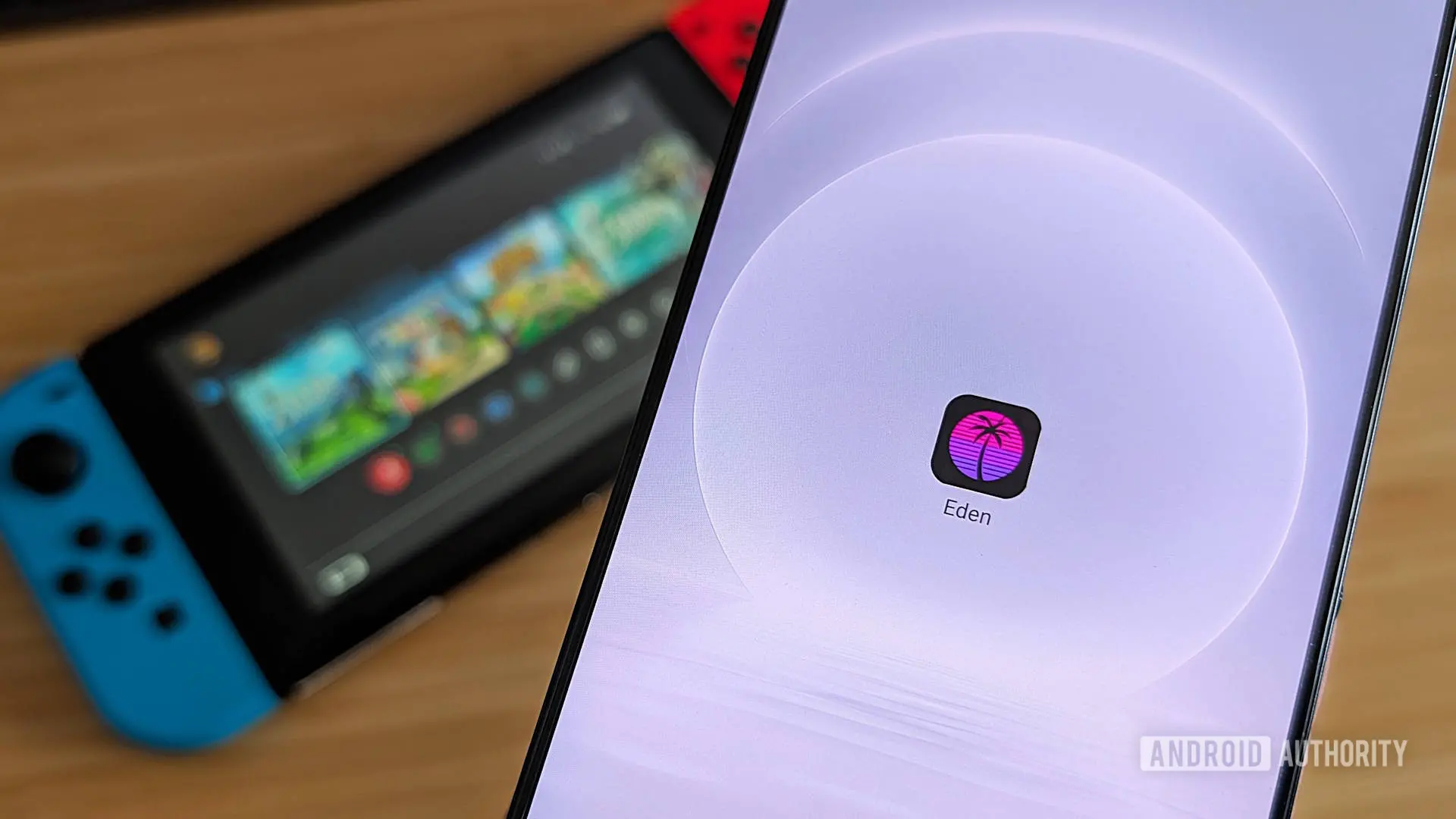
The Nintendo Switch emulation scene on Android has seen remarkable progress over the past year, with Eden emerging as a leading contender. Originally launched in early 2024, Eden quickly gained a reputation for its strong performance and compatibility, often surpassing older emulators like Yuzu and Ryujinx on mobile hardware. Now, on its first anniversary, the development team has rolled out a substantial update that promises to further solidify Eden's position.
What's New in the Anniversary Update
According to the official Eden Discord server, the anniversary update focuses heavily on Qualcomm Snapdragon devices. The team states that users with phones powered by Snapdragon chips—ranging from the Snapdragon 8 Gen 1 to the latest 8 Gen 3 and even older flagship SoCs—can expect noticeably better performance and compatibility. This means that games that previously struggled to maintain playable frame rates may now run smoothly. The update also includes specific fixes for high-profile titles like Luigi's Mansion 3, which had been plagued by graphical artifacts and crashes on most Android emulators.
Beyond game-specific improvements, the update introduces several new features. One key addition is the ability to control the number of Vulkan workers—a setting that allows advanced users to fine-tune multi-threading for better performance on devices with powerful GPUs. Another feature is the legacy rescale pass, which addresses rendering issues in certain games. The emulator now also supports firmware version 22.0, the latest official Nintendo Switch firmware, ensuring compatibility with newer game updates. An integrated auto-updater has been implemented, making it easier for users to keep Eden up to date without manually downloading APKs.
Vulkan Improvements and General Fixes
A significant portion of the update is dedicated to Vulkan API improvements. Vulkan is the backbone of modern Android emulation, offering lower overhead and better performance compared to OpenGL. The Eden team has fixed several Vulkan bugs that caused crashes or graphical corruption in demanding titles. These fixes are especially important for games that rely on advanced rendering techniques, such as dynamic resolution scaling and post-processing effects. The update also includes optimizations for memory management, reducing the likelihood of out-of-memory errors on devices with limited RAM.
Other general changes include better handling of Joy-Con and Pro Controller emulation, though full controller support remains a work in progress. The team has also improved the user interface for loading ROMs, with faster file scanning and better organization. Notably, the update does not introduce any paid features; Eden remains free to use, though the developers accept donations via Patreon.
The Bigger Picture: Emulation Under Legal Pressure
Eden's anniversary update comes at a turbulent time for Nintendo Switch emulation. In late 2023, Nintendo filed a lawsuit against the creators of Yuzu, a popular PC Switch emulator, leading to Yuzu's shutdown and a $2.4 million settlement. Since then, Nintendo has aggressively targeted emulation projects, sending takedown notices and legal threats. The Eden team has operated cautiously, avoiding direct references to circumvention and focusing on a use case of running homebrew and legally backed-up games. However, the legal landscape remains uncertain, and many emulators have shut down or gone underground.
Despite these challenges, the Eden team has continued development, releasing updates roughly every month. The January 2024 update was particularly notable, introducing improved Turnip GPU driver support—open-source drivers for Qualcomm Adreno GPUs that dramatically boost performance on Snapdragon devices. That update also added a quick settings menu and fixed issues with major titles like Metroid Prime 4 (though the game remains unfinished even on real hardware). The anniversary update builds on that foundation, refining the experience and expanding compatibility.
A Look Under the Hood: Snapdragon Optimization
Why does Eden perform so much better on Snapdragon devices? The answer lies in the emulator's reliance on GPU virtualization and driver translation. Nintendo Switch games are designed for the Tegra X1 chip, which uses a Maxwell-based GPU. On Android, emulators must translate these GPU commands to the device's own GPU architecture. Qualcomm's Adreno GPUs, powered by Turnip drivers, offer the most efficient path for this translation. The Eden team has invested heavily in optimizing the Vulkan pipeline for Adreno, resulting in significantly lower driver overhead and fewer translation errors. In contrast, devices with Mali or PowerVR GPUs often struggle with compatibility and performance, though Eden supports them to a lesser degree.
The new Vulkan workers setting allows users to adjust the number of threads used for GPU command processing. On eight-core Snapdragon chips, increasing the worker count can improve throughput, but it also increases CPU load. The default setting is optimized for most phones, but power users can experiment for marginal gains. Similarly, the legacy rescale pass is a workaround for games that rely on specific rendering paths unique to the Switch's hardware. Without this pass, games like Luigi's Mansion 3 show black screens or severe graphical glitches. The feature adds a compatibility layer that mimics the Switch's texture scaling behavior.
Games to Try After the Update
With the anniversary update, several previously unplayable games are now reported to run at acceptable speeds on high-end Android devices. Early adopters on the Eden Discord have tested titles such as The Legend of Zelda: Breath of the Wild, Super Mario Odyssey, and Animal Crossing: New Horizons. While performance varies, many users report 25–30 FPS on Snapdragon 8 Gen 2 phones, which is a significant improvement from earlier builds. The emulator still cannot match the fluidity of a real Switch, but for on-the-go gaming, it's a remarkable achievement.
It's important to note that Eden requires a devices with at least 6GB of RAM for most 3D games, and 8GB recommended. The emulator also demands active cooling, as sustained gaming can cause thermal throttling. Users should also ensure they have the latest Turnip drivers installed, which can be downloaded from the Eden app itself via a dedicated driver management page introduced in January.
Installation and Setup
Getting started with Eden is straightforward. Users need to download the APK from the official website, and then install it as normal (enable install from unknown sources). The emulator requires a folder containing Nintendo Switch firmware files, which can be dumped from a real Switch. Additionally, users must provide their own game ROMs, which should be owned legally. Eden does not include any copyrighted files. The anniversary update introduces an integrated auto-updater, so once installed, future updates will be downloaded and applied automatically.
For best performance, the development team recommends using the Vulkan backend and enabling the "Async Shaders" option, which reduces stuttering by compiling shaders in the background. The emulator also supports save states, allowing players to save their progress at any moment. Graphics settings include resolution scaling up to 2x (1440p on supported devices), and anti-aliasing options. However, these settings are demanding and may cause overheating on non-gaming phones.
In summary, the one-year anniversary update for Eden is a major step forward for Switch emulation on Android. With its focus on Snapdragon devices and Vulkan improvements, it brings Nintendo Switch gaming closer to reality on mobile hardware. While the legal landscape remains precarious, the Eden team's commitment to development offers hope for enthusiasts looking to play their favorite Switch titles away from home.
Source: Android Authority News